Q+A with The Mind Faculty · A free monthly online session
Creativity and Mental Health
You don't have to be good at art. A free, honest conversation about what making something can do: help you understand yourself better, work through burnout, and ease the conflicts that talking alone never quite settles. Ask anonymously.
You don't have to be good at art. It's the objection that stops most people before they begin, and it misunderstands what creative work in therapy is for. Nobody is marking it.
This month, Reena Clare, Art Psychotherapist at The Mind Faculty, answers your questions live about what creative work can actually do: help you understand yourself better, work through burnout when rest alone hasn't touched it, and ease the conflicts that talking has only hardened. She will also cover what genuinely happens in an art therapy session, for anyone picturing something more mysterious than it is. No jargon, no judgment. Ask anonymously, or simply come and listen.
What was said
A recap of our 8 September session with Reena Clare, Art Psychotherapist, joined by Dr Stephen Jambunathan, Senior Consultant Psychiatrist.
Forty-five minutes, cameras off, questions through the chat. This month ran a little differently. Instead of only talking about art therapy, Reena led the room through a short exercise, and many people picked up a pen and joined in from home. She also showed a few pieces from real therapy, with their makers' permission. Those images stay in the room. Here is what came up, and what we said.
You do not have to be good at art
Almost everyone who considers art therapy worries about this first. Reena hears it in nearly every first conversation, and it is the wrong worry. You need no art background and no technical skill, and nobody marks the work. What you are doing is expressing something. How it looks does not matter.
The picture is there to help you, the way a diary or a long walk might. It puts something down on the page where you can look at it from a small distance, and pick it up or put it down as you choose. Nobody is teaching you to draw.
And it is not fortune-telling
People ask, so we will say it plainly. Nobody reads your palm. Reena will not take your drawing, decode it and announce what is wrong with you. Nobody reads your mind, and nobody diagnoses you from a picture.
Dr Stephen described what happens instead. While you are making something, the picture works as a bridge between you and your own thoughts. It gives you a way to notice and reach what is going on in your mind at that moment, including the stream of thought you have not yet found words for. The picture belongs to you, and so does whatever you find in it.
The canvas is yours
Reena kept returning to this. In the room, you are the author. You decide what goes where, what stays, what changes, and what it all means. If life has mostly happened to you, being the one in charge of a page can feel like a real relief. It is a place to take back some say, to tell a story you have been carrying in a new way, and to make every choice yourself.
Two ways in
Sessions can be guided or not, and Reena uses both.
In guided work, Reena suggests a theme or an exercise, chosen to fit what you are working on together. It helps if you freeze at a blank page, and it keeps the work pointed at what you came for.
In unguided work, you choose the materials and the subject, and you build your own story at your own pace. Reena follows rather than leads.
Neither is better. What suits you can change from week to week, and part of her job is noticing that.
What happens in a session
Reena walked us through the shape of it. A session might open with a short meditation, a minute or two to settle and arrive. Then the hands get involved. You might scribble, or work with something you can feel and shape, to loosen up and let some of the tension underneath find its way out before anything more deliberate begins.
Nobody asks you to perform, and nobody asks you to relive anything.
Breathing, doodling, and putting the problem on the page
Reena led us through an exercise, and many people drew along at home. It began with breathing. A few slow breaths, nothing more, to let the day settle and bring your attention into the room. Then she asked us to doodle. No subject, no plan, just the pen moving on the page while you keep breathing.
Two things happen when you do this. The first is that whatever you have been carrying starts to move out of your head and onto the paper. It is there in front of you now, with edges, at a small distance. You can look at it, turn it round, and put it down when you are done. Reena calls this externalising, and it is much of what art therapy does.
The second is quieter. To doodle and breathe you have to be here, with your hand and the page, and not in last week or next month. That is what people mean when they say art can be grounding. For a few minutes the mind stops racing, and a scribble turns out to be enough to get you there.
This is a general summary of a public education session, not personal advice, and it cannot stand in for an assessment. Art therapy can sit alongside other care, including talk therapy, psychiatry and addiction treatment. If something here spoke to you, the useful next step is to talk it through with a clinician about your own circumstances.
If the evening opened something for you, a first session starts as a conversation about what brings you and what you would like to be different. Materials come later, at your pace. Email enquiries@themindfaculty.com and mention the session, or book a consultation.
Session details
Your speaker
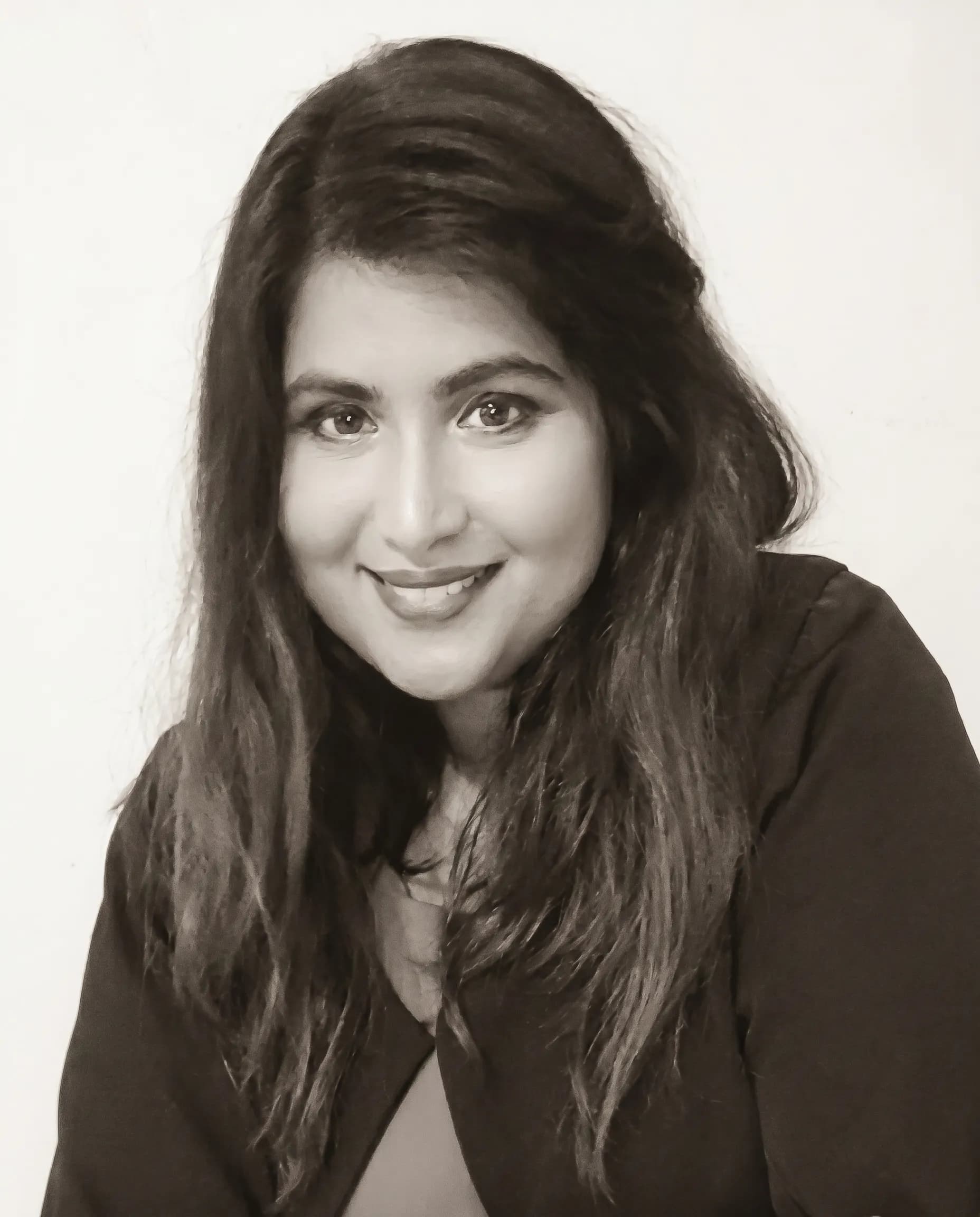
Reena Clare
Art Psychotherapist
Reena holds a Master's in Art Psychotherapy from the University of Hertfordshire and is a certified practitioner in Children's Accelerated Trauma Treatment. In London she worked across the NHS, Westminster Arts and Kids Company, using image and play with children and adults living with trauma, grief, dementia and addiction. She has spent her career with people who were sure they couldn't draw.
Read full profileWhat to expect
You stay private.
Your camera and microphone are off the whole time. You'll never be seen or heard.
Ask anonymously.
Type your question into the chat, and we never read out names.
It's educational, not a consultation.
We answer questions in general terms; we can't diagnose individuals. If you'd like personal support, we'll show you how to reach us.
This session has finished.
Coming up next: Burnout with Dr Lim Chee Min, Tuesday, 10 November 2026 at 7:00–7:45pm (MYT).
Beyond this session
Want to understand Burnout beyond this session: the signs, how assessment works and how we can help?
Read about BurnoutIn crisis right now? You don't have to wait for the session. Talian Kasih 15999 · Befrienders KL 03-7627 2929 (24/7) · Emergency 999.
The Mind Faculty · Solaris Mont Kiara, Kuala Lumpur.